El Born
- Address
- Around Passeig del Born, 08003 Barcelona
- Metro
- Jaume I (L4) or Barceloneta (L4)
- Price
- Free to walk; Santa Maria del Mar cultural visit €8 including towers and roof terraces (2026)
- Hours
- Santa Maria del Mar cultural visits: Mon–Sat 10:00–18:00, Sun 13:00–18:00. Born CCM: Tue–Sun from 10:00, closed Mondays.
- Links
- Official website · Open map
In the thirteenth and fourteenth centuries, when Barcelona was a Mediterranean trading power, this was where the money lived. The district, properly called La Ribera, housed shipowners, merchants and craft guilds, and many streets still carry the names of trades: Argenteria for silversmiths, Sombrerers for hatters, Mirallers for mirror-makers. Passeig del Born, the long rectangular promenade at its centre, was the medieval jousting ground.
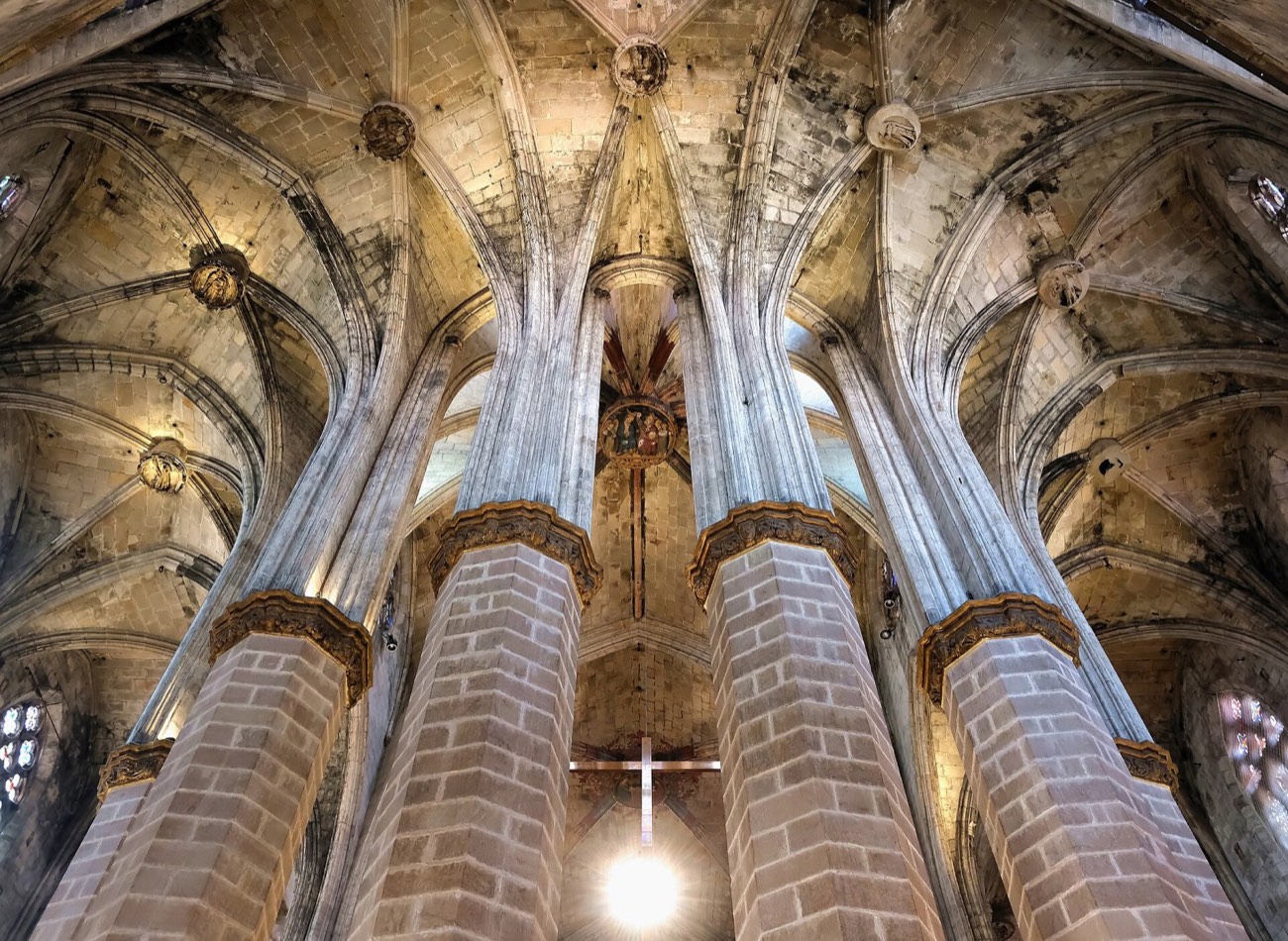
Santa Maria del Mar stands at one end of it. The church was built in just 54 years, between 1329 and 1383, paid for by the people of the neighbourhood and carried stone by stone by the port's dockers, who are remembered in small bronze figures on the main door. Because it went up so fast it is unusually pure in style. The interior is almost bare, with slender octagonal columns set far apart and a wide, calm nave. Many people find it more moving than the Cathedral.
Outside the cultural visiting hours entry to the church is free. During them, Monday to Saturday from 10:00 to 18:00 and Sunday from 13:00 to 18:00, a ticket costs €8 and includes the crypt, the galleries, the towers and the roof terraces, which look out over the old town. Guided visits in English run from Thursday to Sunday. Beside the church, the sunken brick square of the Fossar de les Moreres, with its eternal flame, commemorates those who died defending the city in the siege of 1714.
That siege explains the building at the other end of the Passeig. The Born market, an iron and glass hall from 1876, closed in 1971. When it was dug up for redevelopment, workers found the streets and houses of the neighbourhood that was demolished after 1714 to clear ground for a military citadel. The hall is now El Born Centre de Cultura i Memòria. You can walk in free and look down on the ruins from walkways; guided tours down among them and the exhibitions carry a small charge. It is closed on Mondays.
The rest is for wandering. Carrer de Montcada, lined with medieval palaces, holds the Picasso Museum. The lanes between Carrer de la Princesa and the Passeig are full of small designers, workshops and wine bars, and this is one of the best areas in the centre for an evening drink; see our restaurants guide for where to eat. Tapas bars near Santa Maria del Mar get very busy from 20:00.
Give it half a day, ideally late afternoon running into the evening. The Palau de la Música and Santa Caterina Market are just to the north, and Ciutadella Park begins right behind the Born market hall.
Why go
- Santa Maria del Mar. The purest Catalan Gothic church anywhere, and free outside visiting hours.
- The 1714 ruins. An entire lost neighbourhood on show under a nineteenth-century market roof, free to view.
- Evenings. Better bars and a more local crowd than the Gothic Quarter.
- Shopping. Independent boutiques and workshops rather than chains.
 Keep in mind
- Noisy at night. Streets around Passeig del Born stay loud until late, which matters if you sleep here.
- Mondays. Both the Born centre and the Picasso Museum are closed.
- Busy tapas bars. The well-known places by the church have queues at peak times and do not all take bookings.
- Bag snatching. Quieter than La Rambla, but keep an eye on phones left on terrace tables.