Palau de la Música Catalana
- Address
- Carrer Palau de la Música, 4-6, 08003 Barcelona
- Metro
- Urquinaona (L1, L4)
- Price
- Self-guided visit €20, guided tour €24; concert tickets vary (2026)
- Hours
- Visits daily 9:00–15:30; concerts most evenings
- Links
- Official website · Open map
The Palau was built for the Orfeó Català, a choir founded in 1891 that became a symbol of the Catalan cultural revival. The society raised the money by public subscription and gave the job to Lluís Domènech i Montaner, Gaudí's great rival, who brought in the best glassmakers, ceramicists and sculptors in the city. It opened in 1908 and has been a UNESCO World Heritage site since 1997.
The plot is cramped, wedged into narrow streets on the edge of the old town, so the exterior is hard to take in. Look up at the corner for the sculpture group The Catalan Song spilling off the façade, and at the mosaic-clad columns of the balcony, each with a different floral pattern. The old ticket windows are set inside the pillars at street level.
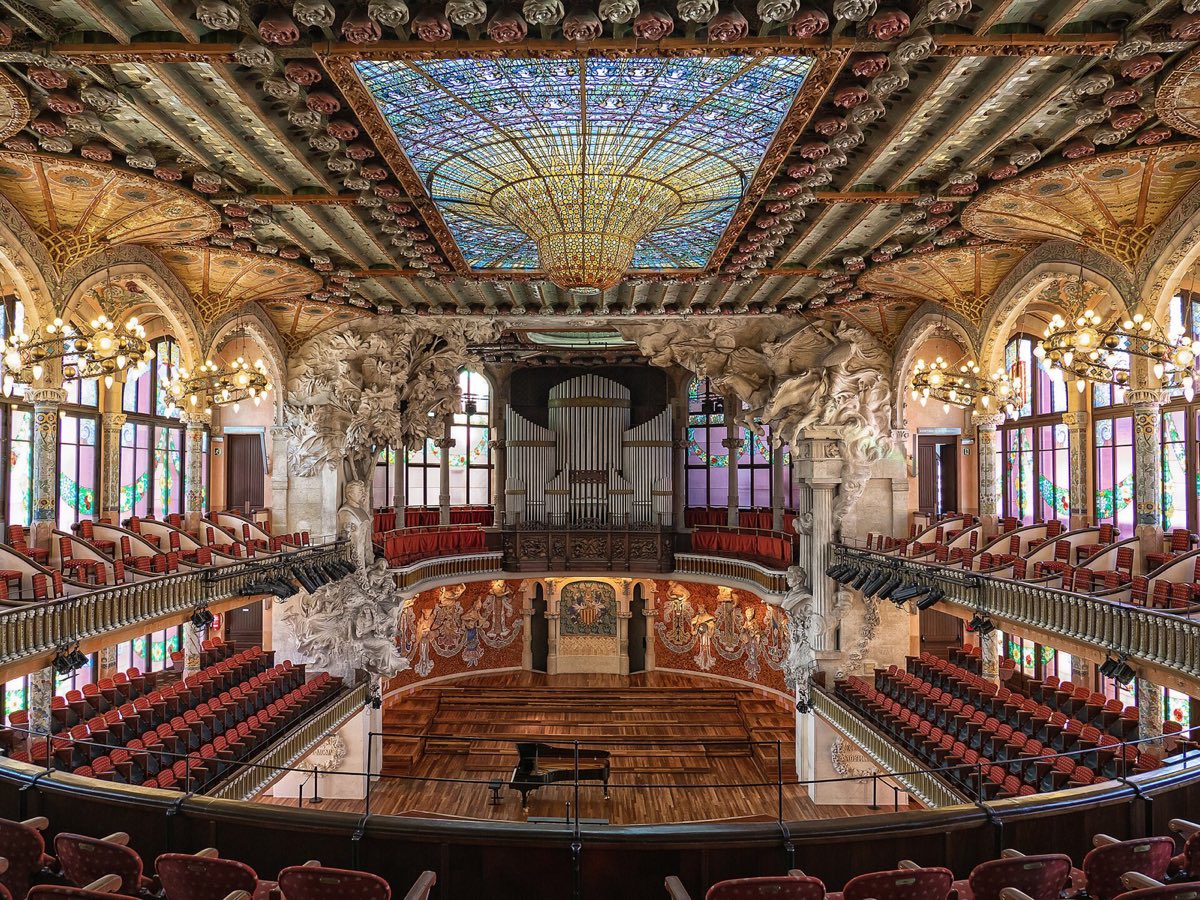
Nothing outside prepares you for the auditorium. Domènech i Montaner hung the walls from a steel frame so that they could be almost entirely glass, making this a concert hall lit by daylight. Overhead is the famous stained-glass skylight, an inverted dome of gold and blue that drops from the ceiling like a huge drop of honey. Around the back of the stage, eighteen muses emerge from the wall, their lower halves in mosaic and their upper bodies in sculpture, each playing a different instrument. A Wagnerian cavalcade of Valkyries rides across the top of the proscenium opposite a bust of Beethoven.
Visits run daily between 9:00 and 15:30 and last about 50 minutes. In 2026 the guided tour costs €24, or €20 for under-35s and over-65s, and the self-guided visit with a digital guide costs €20; children under ten go free with an adult. Buy online, as the box office adds €1 per ticket and English tours fill up. Morning visits get the best light through the skylight.
The better option, if dates allow, is to come back for a performance. The programme runs from the resident choirs and visiting symphony orchestras to flamenco and Spanish guitar recitals aimed squarely at visitors. Seats for many concerts cost no more than a tour, and you see the hall doing what it was built for. Check the sightline when booking; some side seats in the upper tier have restricted views.
The Palau is five minutes from the Cathedral and the Santa Caterina Market, and ten from the Picasso Museum, so it fits easily into a day in the old town. The foyer café is open to everyone and is a pleasant place for a coffee under the brick vaults.
Why go
- The skylight. One of the most beautiful pieces of stained glass in Europe.
- Not Gaudí. Proof that Barcelona's Modernisme had more than one genius.
- Concerts. A chance to use a UNESCO monument for its real purpose, often for the price of a tour.
- Quick to visit. The tour takes under an hour and rarely sells out days ahead.
 Keep in mind
- Short visiting day. Tours stop at 15:30, so you cannot leave it for the late afternoon.
- Rehearsals. The hall is in constant use and access to parts of it can occasionally be restricted.
- Tourist shows. Some of the flamenco and guitar evenings are pleasant rather than first-rate.
- Restricted views. Check your seat before buying the cheapest concert tickets.